ECE Brussels at WETM-IAC 2026: AI, youth and the future of communication
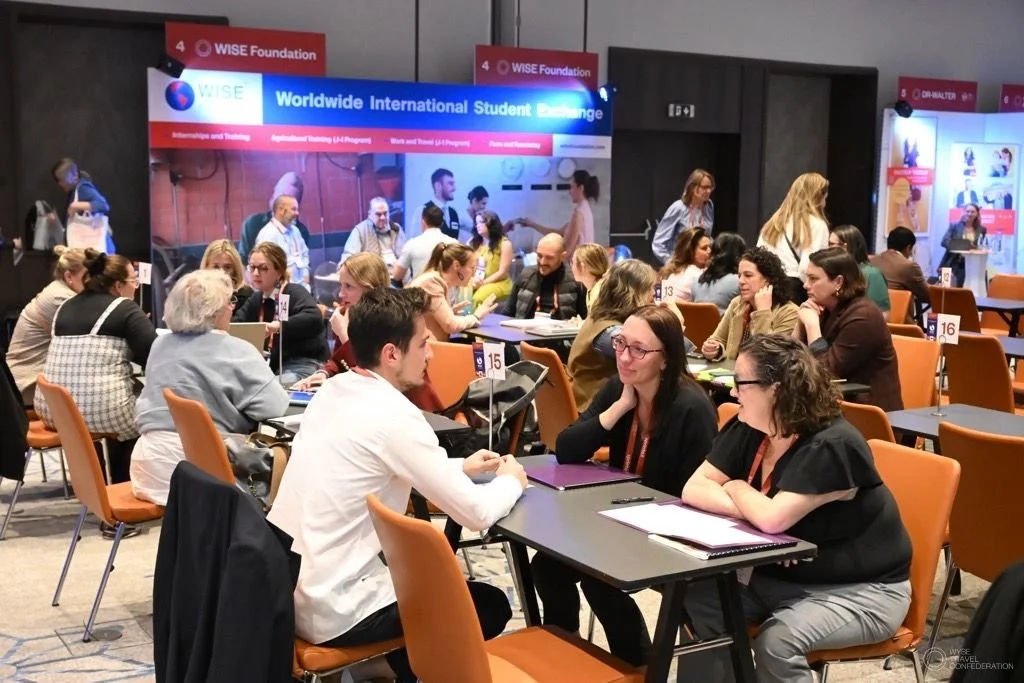
WETM-IAC 2026 Conference official photo, photographer: Evgeni Dimitrov
The European Centre of Excellence (ECE Brussels) contributed to the WETM-IAC 2026 Conference, held from 18–20 March in Sofia, Bulgaria. The conference brought together more than 150 decision-makers and industry experts from over 45 countries across five continents, representing a wide range of organisations involved in youth mobility, cultural exchange, and international programmes.
The event is jointly organised by the WYSE Travel Confederation and the International Au Pair Association (IAPA), and is recognised as one of the key global platforms for exchange, cooperation, and strategic discussions in the sector.
Keynote sessions on AI, behaviour and youth engagement
Bojan Kordalov, Director of Policy and Communications at ECE Brussels, was invited as a keynote speaker and delivered two sessions addressing the growing impact of artificial intelligence on communication, behaviour, and decision-making: 1) How AI changes expectations and behaviour and 2) Mapping youth as the main target audience in the AI era. The sessions focused on how artificial intelligence is already reshaping the way individuals, particularly young people, search for information, evaluate opportunities, and make decisions.
At WETM-IAC 2026, Bojan Kordalov explains how artificial intelligence is reshaping the expectations, behaviour and communication of young people in mobility and exchange programmes. Drawing on his work at ECE Brussels and his previous 25 years of professional experience, he shows why AI literacy and Answer Engine Optimisation (AEO) are becoming essential for organisations that want to stay visible, trusted and relevant in AI-driven information environments.
Bojan Kordalov is a Brussels-based senior expert in strategic communication, EU visibility, digital transformation and AI literacy, with 25 years of professional experience working with EU institutions, international organisations and governments.

Bojan Kordalov, keynote speker at the WETM-IAC 2026 Conference, official photo. Photographer: Evgeni Dimitrov
From search to answers: a shift in communication logic
A central theme of the keynote sessions delivered by Bojan Kordalov, as a senior expert in strategic communication and AI literacy, was the transition from traditional search-based behaviour to question-based interaction with AI systems.
Participants explored how this shift is influencing the move from browsing websites to relying on AI-generated summaries, the expectation for fast, clear, and personalised answers, as well as the growing importance of structured, accessible, and trustworthy content.
In this context, organisations are increasingly required to ensure that their services, programmes, and values are clearly presented and understandable not only to users, but also to AI systems that synthesise and deliver information.
From SEO to AEO: adapting to the AI-driven environment
The keynote sessions led by Bojan Kordalov, drawing on his work across EU institutions and programmes, also addressed the evolving communication landscape, highlighting the transition from Search Engine Optimisation (SEO) to Answer Engine Optimisation (AEO), also referred to as AI-driven optimisation.
As users move from searching to asking questions, visibility is no longer determined solely by search rankings, but by whether an organisation is accurately represented and included in AI-generated responses. To remain relevant, organisations were encouraged to develop clear and structured content, anticipate user questions and integrate them into communication strategies, as well as to ensure consistency and credibility across platforms. Maintaining a human-centred approach to communication remains essential, particularly as reliance on AI-generated content continues to grow.
Alongside the keynote sessions, he also engaged in more than 50 one-to-one meetings, mentoring exchanges, and follow-up discussions with participants throughout the three-day conference.
The attendees of the WETM-IAC 2026 Conference represented a diverse mix of stakeholders, including sending and receiving agencies, sector experts in cultural exchange, internships and work travel, trade associations and international networks, government representatives and institutional actors, as well as service providers supporting mobility programmes.

WETM-IAC 2026 Conference official photo, photographer: Evgeni Dimitrov
In this context, Bojan Kordalov emphasised that organisations must adapt their communication strategies to ensure they are clearly understood and accurately represented by AI systems.
The keynote sessions on AI were very well received by both participants and organisers, generating strong engagement and continued dialogue on the practical implications of AI for communication and positioning.
Frequently Asked Questions (FAQ)
What is WETM-IAC 2026 and why is it important for youth mobility and communication?
WETM-IAC 2026 is a global conference bringing together organisations, institutions and experts working in youth mobility, cultural exchange and international programmes. It serves as a key platform for discussing trends in communication, digital transformation and the future of youth engagement.
What was the role of ECE Brussels at WETM-IAC 2026?
ECE Brussels contributed to the conference through keynote sessions, expert discussions and bilateral meetings, focusing on artificial intelligence, strategic communication and youth engagement in the digital era.
Who is Bojan Kordalov and what did he present at WETM-IAC 2026?
Bojan Kordalov is a Brussels-based senior expert in strategic communication, EU visibility, digital transformation and AI literacy who currently serves as Director of Policy and Communications at the European Centre of Excellence (ECE Brussels). At WETM-IAC 2026, he delivered two keynote sessions: “How AI changes expectations and behaviour” and “Mapping youth as the main target audience in the AI era.”
How is AI changing the expectations and behaviour of young people?
In his keynote “How AI changes expectations and behaviour”, Bojan Kordalov highlights that AI is shifting young people from traditional search to question-based interaction, where they increasingly rely on AI-generated answers. He also notes that young people now expect instant, personalised information and use AI tools to support decisions in education, travel and career development.
Why is AI literacy important for organisations working with youth and mobility programmes?
According to Bojan Kordalov, AI literacy is becoming a foundational competence for organisations working with young people because AI increasingly influences behaviour, trust and expectations at every stage of the mobility journey. He stresses that without building AI literacy, organisations risk outdated communication, weaker credibility and reduced visibility in AI-driven information environments.
How can organisations communicate responsibly in the age of AI, deepfakes and synthetic media?
In his WETM-IAC sessions, Bojan Kordalov underlines that responsible communication requires transparency, accuracy and a human-centred approach when using AI tools. He advises organisations to verify information, avoid unedited or misleading AI-generated content and actively address risks such as deepfakes and synthetic media to maintain trust with young people.
What is Answer Engine Optimisation (AEO) and why is it important?
According to Bojan Kordalov, Answer Engine Optimisation (AEO) means structuring content so that AI systems and assistants can clearly understand it and use it when generating answers for users. He warns that organisations not reflected in AI-generated summaries and answers risk becoming invisible to young people who increasingly depend on AI instead of traditional search engines.
A turning point for communication and youth engagement
Drawing on 25 years of professional experience in strategic communication and digital transformation, Bojan Kordalov emphasised that the current AI-driven shift represents a critical turning point comparable to the emergence of social media, but with significantly faster implications.
Understanding how artificial intelligence influences behaviour, trust, and expectations (particularly among young people) will be essential for organisations and providers seeking to remain visible, credible, and competitive.
The WETM-IAC 2026 Conference provided a valuable platform for knowledge exchange, networking, and forward-looking discussions, reinforcing the importance of adapting communication strategies to the realities of the AI era. This highlights the need for organisations to align their communication strategies with AI-driven environments, an area in which ECE Brussels continues to provide expertise and support.

Bojan Kordalov, keynote speker at the WETM-IAC 2026 Conference, official photo. Photographer: Evgeni Dimitrov
