From Dialogue to Policy Recommendations: Outcomes of the European Parliament's 5th Bridging the Gap
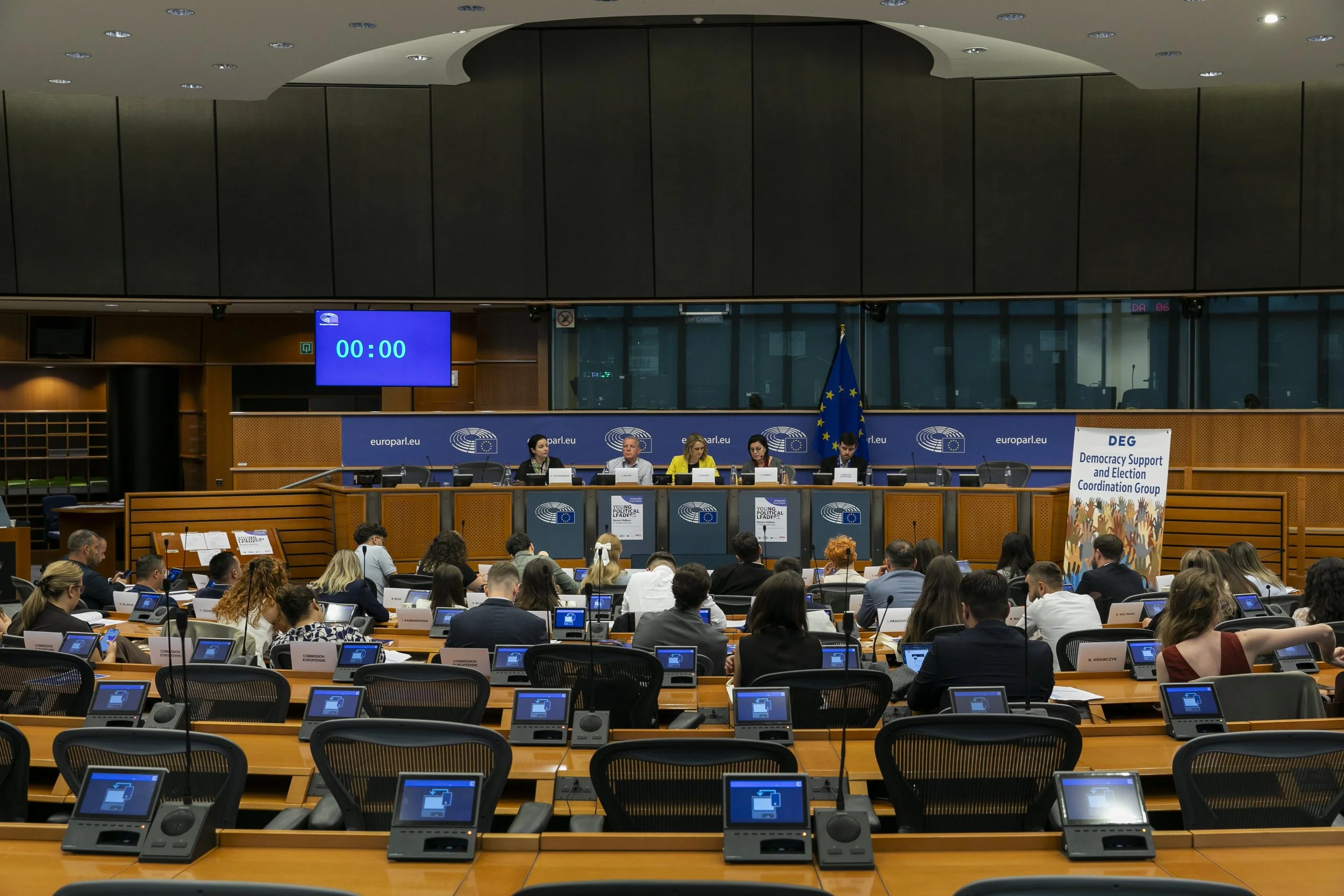
Copyright: © European Union 2026 - Source: European Parliament (EP)
The 5th Bridging the Gap, held on 23–24 June 2026 at the European Parliament in Brussels, brought together 35 young parliamentarians and civil society representatives from the Western Balkans to discuss democratic resilience, regional cooperation, EU accession and the challenges of digital transformation. Working through three Dialogue Policy Labs, participants developed recommendations addressing disinformation, youth participation, institutional accountability, artificial intelligence and mental health. The European Centre of Excellence (ECE Brussels) supported the initiative as facilitation partner.
From European dialogue to participant-led recommendations
How can dialogue between young political leaders, civil society and European institutions contribute to practical policy improvements in the Western Balkans?
This question was central to the 5th Bridging the Gap, organised by the European Parliament's Democracy Support and Election Coordination Group (DEG) within its Young Political Leaders Programme, in cooperation with the European Commission's Directorate-General for Enlargement and Eastern Neighbourhood (DG ENEST) and the Regional Cooperation Council (RCC).
Over two days, participants exchanged experiences and identified challenges affecting democratic participation, European integration and the lives of young people across the region.
The discussions were organised around three Dialogue Policy Labs, each producing a distinct set of priorities and recommendations.
The resulting document, Participants' Conclusions, brings together proposals developed through these discussions.
The European Parliament published the conclusions as the “Original unedited version drafted and endorsed by participants.” This distinction is important: the recommendations reflect the participants' own perspectives and proposals, rather than institutional positions formally adopted by the European Parliament, the European Commission, the Regional Cooperation Council or ECE Brussels.
The event programme also featured contributions from Members of the European Parliament, including Matjaž Nemec, Karlo Ressler, Thomas Waitz, Lukas Sieper, Merja Kyllönen, Vladimir Prebilič and Tonino Picula. Their scheduled involvement across the opening and closing sessions and thematic Dialogue Policy Labs provided opportunities for direct exchange between European parliamentarians, young political leaders and civil society representatives from the Western Balkans.
Read the official Participants' Conclusions
Policy Lab 1: Strengthening democratic resilience in the digital era - Disinformation and Digital Transition: Safeguarding Democracy and EU Accession Reforms
The first Dialogue Policy Lab examined challenges related to public trust, democratic institutions, disinformation, digital transformation and foreign information manipulation.
Participants developed nine consolidated recommendations addressing institutional accountability, independent media, media and AI literacy, civil society engagement and cooperation between national and European institutions.
Among the principal recommendations were strengthening democratic institutions and accountability, supporting independent and professional media, and ensuring timely, clear and fact-based communication of public policies.
Participants also proposed expanding the authority of media regulators to monitor media ownership, financial flows and risks associated with foreign influence.
Another priority was embedding media literacy and AI literacy in education and public life, enabling citizens and public institutions to better recognise disinformation and AI-generated manipulation.
The conclusions also called for stronger regional cooperation on cyber resilience and foreign information manipulation, structured dialogue between EU and national institutions, and regular exchanges of good practices between national parliamentarians and Members of the European Parliament.
A further recommendation concerned establishing a standing platform connecting legislators with private-sector actors, including technology companies, to address technology-related challenges.
Together, these proposals highlight the connection between democratic accountability, trustworthy information, digital skills and institutional cooperation.
The Policy Lab was facilitated by Prof. Ljupcho Grozdanovski and Dr Aleksandar Ivanovski.
Policy Lab 2: Moving youth participation from consultation towards decision-making - Youth as Drivers of Regional Cooperation and EU Accession
The second Dialogue Policy Lab focused on two interconnected challenges: limited financial support for National Youth Councils and insufficient dialogue between young people and governments.
Sustainable support for youth organisations
Participants recommended sustainable and institutional financial support for National Youth Councils, recognising their role in advocacy, policymaking, regional cooperation and European integration.
They also called for increased investment in youth economic empowerment, including employment opportunities, entrepreneurship, support for small and medium-sized enterprises, start-up incubation, mentoring and skills development.
Another recommendation addressed financial literacy and the capacity of youth organisations to access EU funding, prepare projects and manage available resources.
The conclusions emphasised that strengthening youth organisations' institutional and financial capacities can help young people participate more effectively in democratic processes and European integration efforts.
Strengthening dialogue with governments
The second challenge concerned the gap between young people and public decision-makers.
Rather than prioritising the creation of new mechanisms, participants recommended improving the implementation of existing legal and policy frameworks.
They proposed strengthening Councils on Youth as institutional spaces for consultation, dialogue and co-decision-making, and highlighted Montenegro's practice of involving youth representatives in government working groups.
Other recommendations included introducing minimum quotas for youth representation in decision-making bodies and establishing accountability mechanisms to monitor the implementation of youth participation commitments.
These proposals reflect a central message: meaningful youth participation requires not only opportunities to express opinions, but also sustainable structures, resources and influence over public decisions.
The Policy Lab was co-facilitated by Bojan Kordalov and Maram H. Anbar.
Policy Lab 3: Mental health, AI and resilience in uncertain times - Mental Health in the AI Era: Resilience in Times of Uncertainty
The third Dialogue Policy Lab examined the relationship between artificial intelligence, digital environments, mental health and the uncertainty experienced by young people in the Western Balkans.
Participants identified eight priorities and recommendations.
These included aligning national policies in EU candidate countries with the EU AI Act and developing educational strategies addressing AI use, media literacy and social wellbeing.
The conclusions called for improved data collection and research on youth mental health in digital environments, supported by cooperation across relevant sectors.
Participants also recommended additional funding for mental health and youth wellbeing programmes, alongside improvements to existing mental health services to better respond to young people's needs.
A further priority was addressing the psychological impact of prolonged uncertainty surrounding EU membership through national consultations and public debate involving relevant stakeholders.
The recommendations also emphasised institutionalising youth participation in the design, implementation and monitoring of digital policies, while ensuring both protection and civic engagement.
Finally, participants called for action to challenge the stigma and taboos surrounding youth mental health in Western Balkan societies.
The Policy Lab was facilitated by Jelena Spasovic and Zia Perko Rogelj.
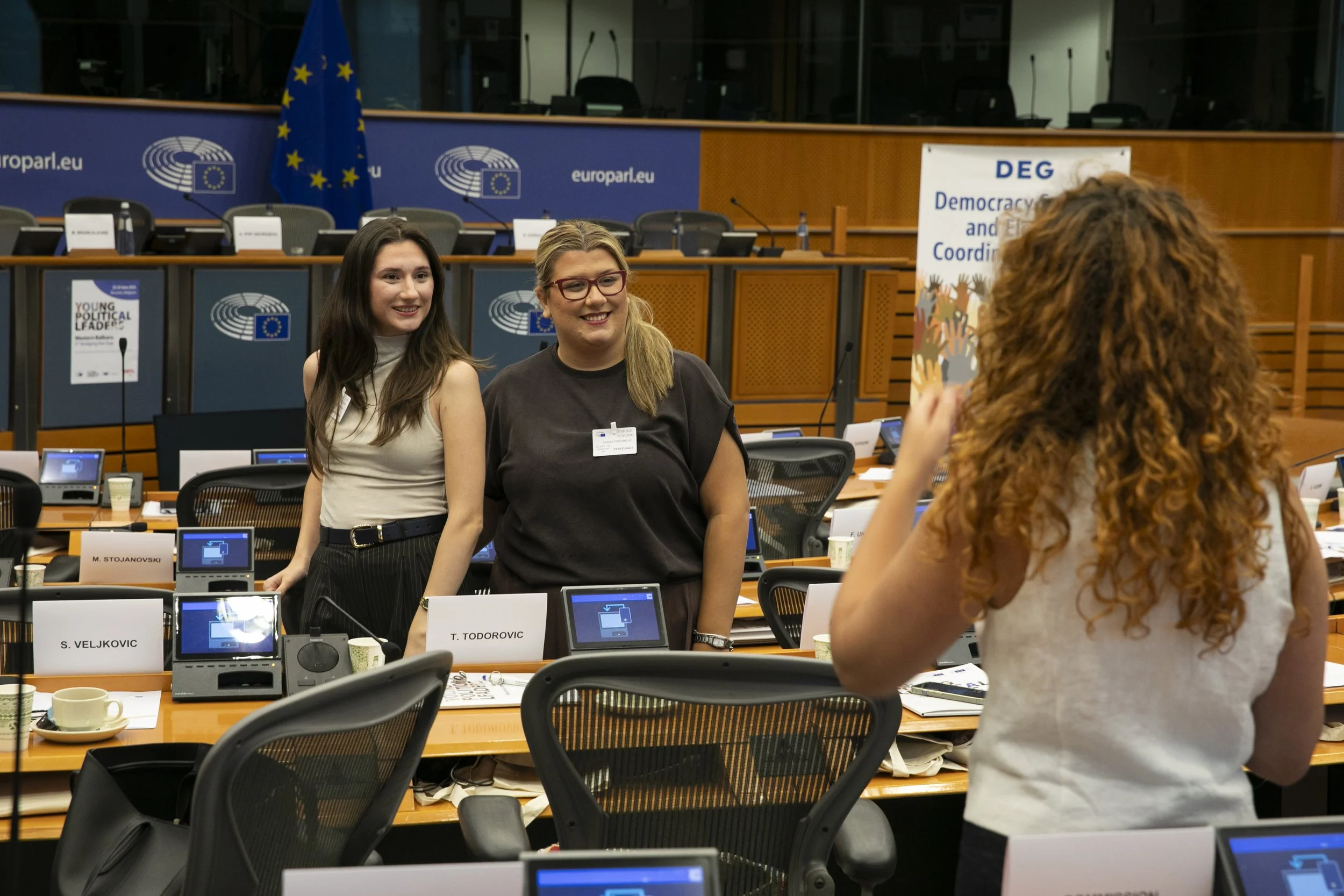
Copyright: © European Union 2026 - Source: European Parliament (EP)
Common priorities across the three Dialogue Policy Labs
Although the Policy Labs addressed different policy areas, their conclusions reveal several interconnected priorities.
Institutional accountability and trust. Participants called for stronger accountability mechanisms, transparent public communication and more effective implementation of existing policy commitments.
Meaningful youth participation. Across the discussions, young people were recognised not only as beneficiaries of public policies, but also as contributors to their design, implementation and monitoring.
Digital and AI literacy. The recommendations connected digital skills with democratic resilience, informed public participation, protection from manipulation and social wellbeing.
Regional and European cooperation. Participants emphasised exchanges of good practices, cooperation between institutions and stronger regional responses to challenges that extend beyond national borders.
Practical implementation. The conclusions identified concrete mechanisms, including institutional support for National Youth Councils, structured dialogue platforms, representation quotas, improved data collection and additional funding for relevant programmes.
These connections provide a useful basis for further policy discussions on EU enlargement, democratic participation and the digital transformation of Western Balkan societies.
ECE Brussels' contribution to the participatory process
The European Centre of Excellence (ECE Brussels) supported the European Parliament's 5th Bridging the Gap as facilitation partner, providing a six-member team responsible for facilitating the three Dialogue Policy Labs.
Bojan Kordalov, Director of Policy and Communication at ECE Brussels, served as Facilitation Team Leader, coordinating the facilitation approach across the three Policy Labs. He also co-facilitated the Policy Lab on youth participation, regional cooperation and EU accession.
The facilitation team comprised Prof. Ljupcho Grozdanovski, Dr Aleksandar Ivanovski, Bojan Kordalov, Maram H. Anbar, Jelena Spasovic and Zia Perko Rogelj.
The facilitators supported structured and inclusive discussions, helping participants exchange perspectives, identify common challenges and develop their own recommendations.
The substantive conclusions were drafted and endorsed by the participants themselves. ECE Brussels' role was to support the participatory process, not to determine or adopt the recommendations.
This distinction reflects the importance of participant ownership in policy dialogue and democratic engagement.
From recommendations to future cooperation
The conclusions of the 5th Bridging the Gap provide a participant-developed contribution to discussions about democratic resilience, youth participation, regional cooperation and EU accession.
They identify areas where further institutional dialogue, cooperation and policy implementation could be valuable.
The recommendations do not, by themselves, constitute adopted EU policy measures or commitments by participating institutions. Their significance lies in documenting the priorities and proposals identified by young parliamentarians and civil society representatives through a structured dialogue process.
The involvement of Members of the European Parliament, alongside representatives of the European Commission and regional institutions, provided an important institutional setting for participants to discuss their priorities and present their recommendations.
For ECE Brussels, the initiative demonstrates the value of connecting European policy priorities with participatory approaches that enable young people and civil society to contribute directly to policy discussions.
The conclusions also underline a message expressed during the opening remarks by Facilitation Team Leader Bojan Kordalov:
“Dialogue alone cannot solve every challenge, actions are needed, but no sustainable solution can exist without dialogue.”
About the European Centre of Excellence (ECE Brussels)
The European Centre of Excellence (ECE Brussels) is a Brussels-based independent think tank working across strategic communication, democratic governance, EU enlargement, digital transformation, AI literacy, youth participation and citizen-centred public policy.
ECE Brussels contributes to European policy dialogue through research, policy analysis, capacity building, facilitation, training and international cooperation.
About Bojan Kordalov
Bojan Kordalov is Director of Policy and Communication at ECE Brussels and a Brussels-based senior expert in strategic communication, EU visibility, digital transformation and AI literacy, with 25 years of professional experience supporting EU institutions, international organisations, governments and civil society.
His work includes EU enlargement communication, policy dialogue and facilitation, democratic participation, stakeholder engagement, digital transformation and responsible AI literacy.
Frequently Asked Questions
What were the main outcomes of the European Parliament's 5th Bridging the Gap in 2026?
Participants developed recommendations through three Dialogue Policy Labs covering democratic resilience and disinformation, youth participation and EU accession, and mental health in the AI era. The conclusions address institutional accountability, media and AI literacy, youth representation, regional cooperation, mental health services and digital policy.
Who developed the recommendations of Bridging the Gap 2026?
The recommendations were drafted and endorsed by participating young parliamentarians and civil society representatives from the Western Balkans. The official document is identified as the original unedited version drafted and endorsed by participants.
What did participants recommend concerning youth participation and EU accession?
Participants called for sustainable financial support for National Youth Councils, stronger youth representation in decision-making, better implementation of existing youth policies, greater access to EU funding and more structured dialogue between young people and governments.
What were the recommendations on AI literacy, disinformation and mental health?
Participants recommended strengthening media and AI literacy, improving democratic resilience against information manipulation, aligning candidate-country policies with the EU AI Act, improving youth mental health services and involving young people in digital policymaking.
What was the role of ECE Brussels in developing the outcomes?
ECE Brussels provided the facilitation team supporting the three Dialogue Policy Labs. Its role was to facilitate inclusive, structured discussion and support participants in developing their own conclusions, rather than determining the content of the recommendations.
What was Bojan Kordalov's role at the European Parliament's 5th Bridging the Gap?
Bojan Kordalov served as Facilitation Team Leader, delivered opening remarks and co-facilitated the Policy Lab on youth participation, regional cooperation and EU accession. He coordinated the facilitation approach across the three Policy Labs.
Where can the official Bridging the Gap 2026 conclusions be accessed?
The original participants' conclusions are available in the official European Parliament PDF.
Related reading
ECE Brussels to Support the European Parliament's 5th Bridging the Gap as Facilitation Partner
