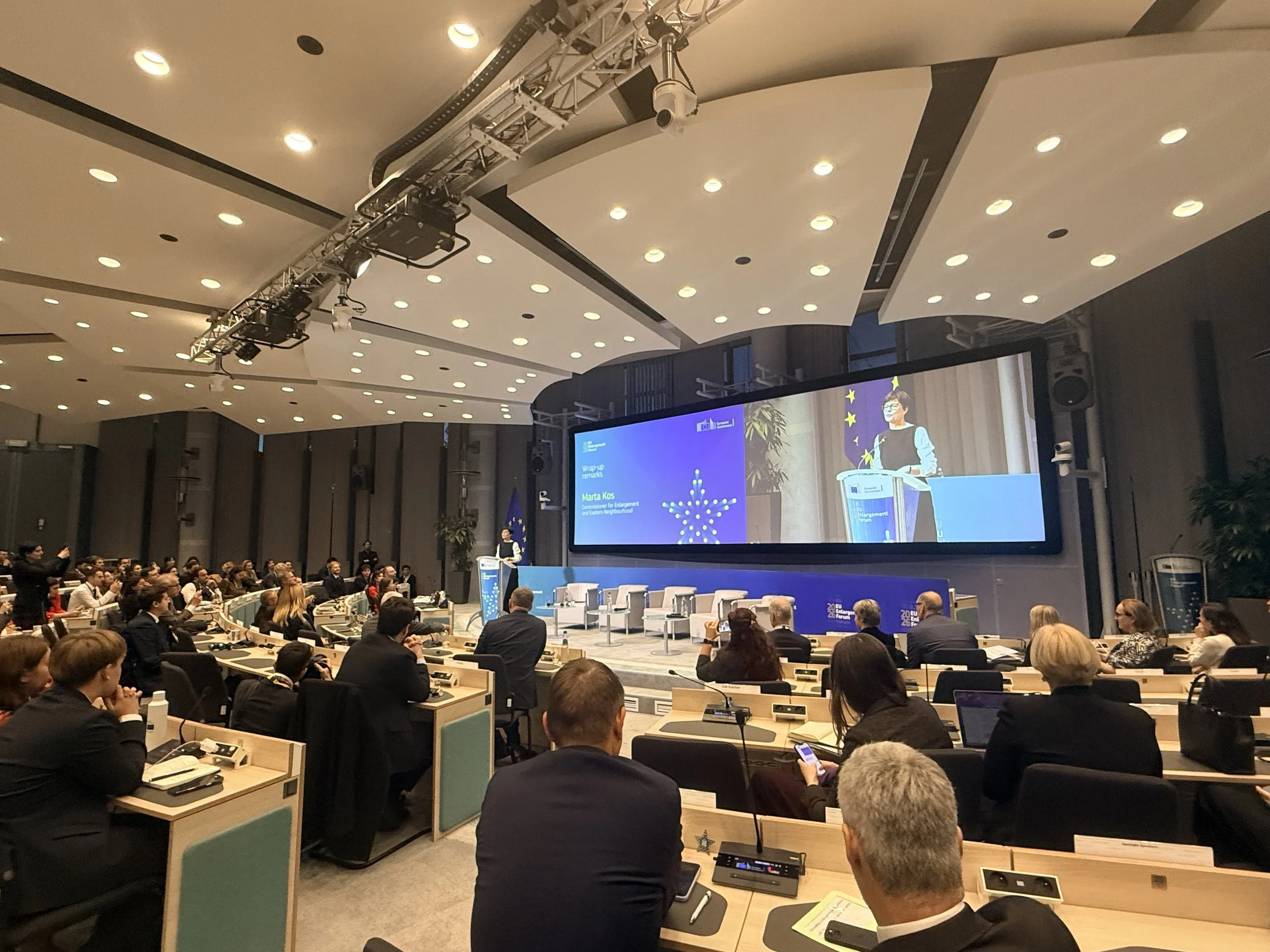
Bojan Kordalov represented the European Centre of Excellence (ECE Brussels) at the EU Enlargement Forum 2026 in Brussels, convened by the European Commission. Commissioner for Enlargement Marta Kos opened the flagship event, and European Commission President Ursula von der Leyen delivered the opening keynote.
Photo credit: ECE Brussels
Candidate countries have to deliver reforms. EU Member States have to sustain political support and prepare the Union to welcome new members. The flagship day of the second EU Enlargement Forum, held in Brussels on 16 November 2026, showed renewed political momentum for enlargement. Candidate-country leaders set out their commitments to reforms, while European Commission President Ursula von der Leyen and European Council President António Costa made the case for a Union ready to welcome new members. Commissioner for Enlargement Marta Kos opened the Forum by putting enlargement at the centre of the debate about Europe’s future and closed by calling for the support of EU Member States. The Directorate-General for Enlargement and Eastern Neighbourhood (DG ENEST) helped bring those conversations together across the two-day programme. Official Forum programme · Closing session recording
Bojan Kordalov, Director of Policy and Communications at the European Centre of Excellence (ECE Brussels), attended on behalf of the Brussels-based think tank. ECE Brussels contributes to that effort by convening policy dialogues on EU enlargement, strategic communication and youth participation.
President Ursula von der Leyen on preparing the EU for enlargement
European Commission President Ursula von der Leyen drew on the experience of past enlargements to make the case for acting now. Earlier accessions helped secure democracy and freedom, expanded economic opportunities and strengthened the Union as a whole. Her address also set out what the EU needs to do before the next accessions, from improving how a larger Union makes decisions to opening opportunities for gradual integration and investment. She underscored the importance of lasting respect for the rule of law. European Commission coverage of the opening address
Commissioner Marta Kos on keeping enlargement high on the political agenda
Commissioner for Enlargement Marta Kos opened the Forum with a question about the kind of Europe today’s leaders want to leave to future generations. She placed enlargement in the context of a more contested geopolitical environment and pointed to the pace at which some candidate countries are advancing. Her remarks made clear why enlargement needs sustained political attention alongside the technical work of accession. The Forum, convened by the European Commission through its Directorate-General for Enlargement and Eastern Neighbourhood (DG ENEST), gave EU and candidate-country leaders a place to discuss both. Commissioner Marta Kos’s opening remarks · Official Forum programme
Reform commitments need political backing on both sides
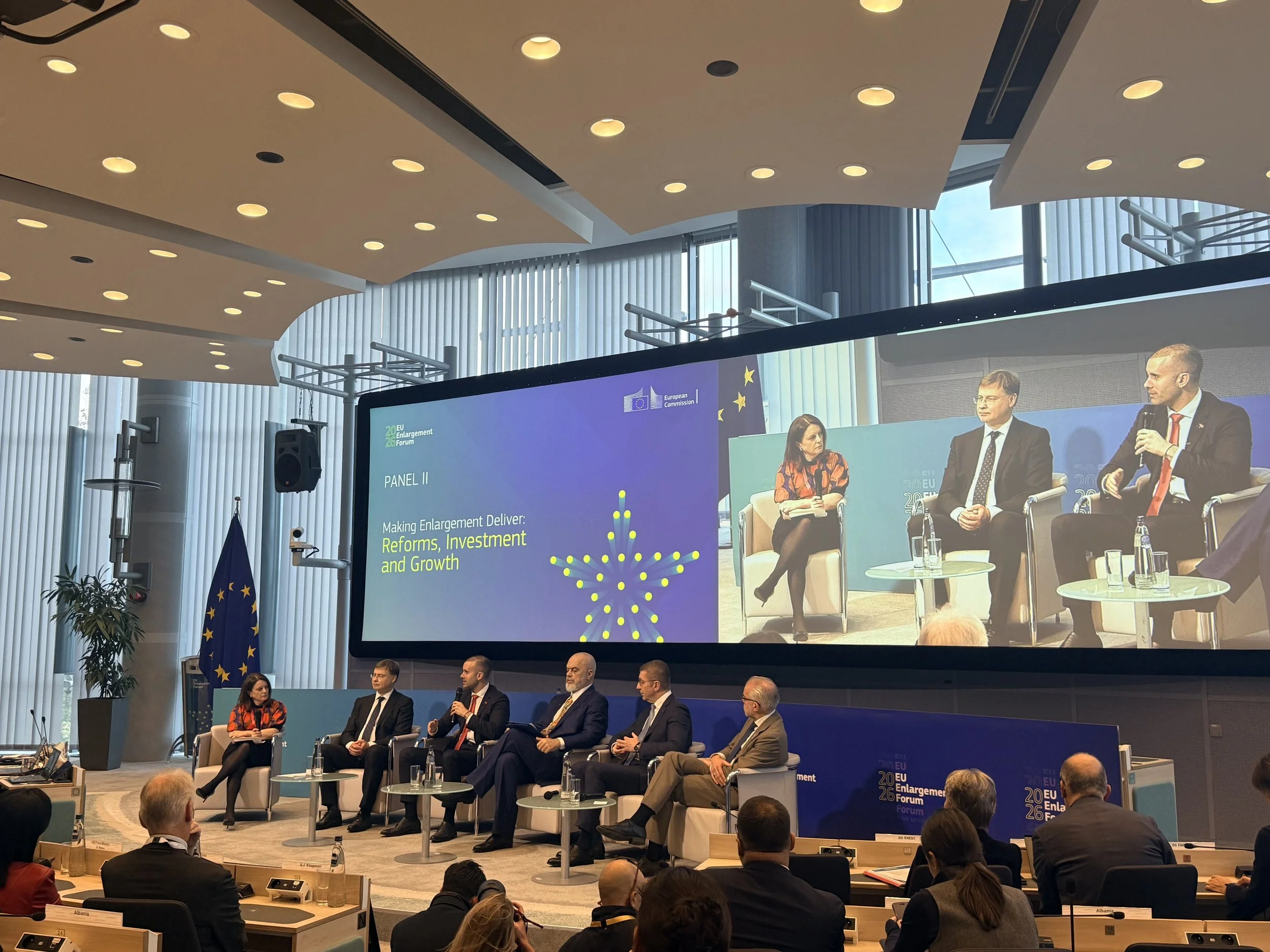
Two panels made the division of work concrete. The discussion on reforms, investment and growth brought together the prime ministers of Albania, Montenegro and North Macedonia alongside EU representatives. A later panel brought ministers from EU Member States into the discussion about preparing for a larger Union. Forum programme and session recordings
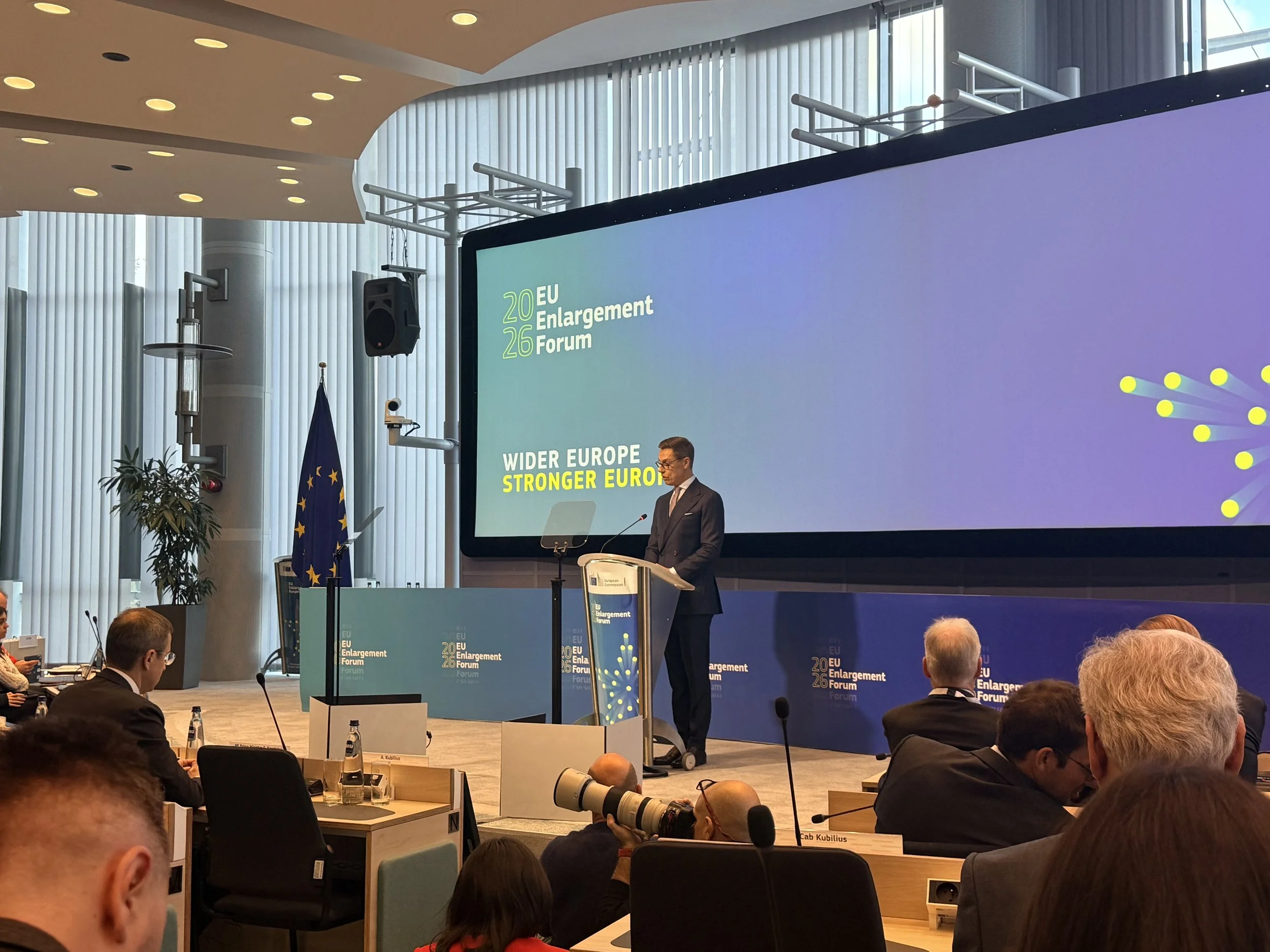
Bojan Kordalov represented the European Centre of Excellence (ECE Brussels) at the EU Enlargement Forum 2026 in Brussels, convened by the European Commission. Commissioner for Enlargement Marta Kos opened the flagship event, and European Commission President Ursula von der Leyen delivered the opening keynote.
Photo credit: ECE Brussels
What governments should communicate about EU enlargement
Bojan Kordalov, Director of Policy and Communications, ECE Brussels:
Candidate-country governments should explain what each accession reform changes in practice and show citizens the results. EU Member States have a communication responsibility of their own. They should explain why enlargement matters to their citizens and what their governments are doing to prepare the Union for new members. Publishing clear milestones and reporting back on progress would give citizens on both sides a way to judge whether political commitments are being met.
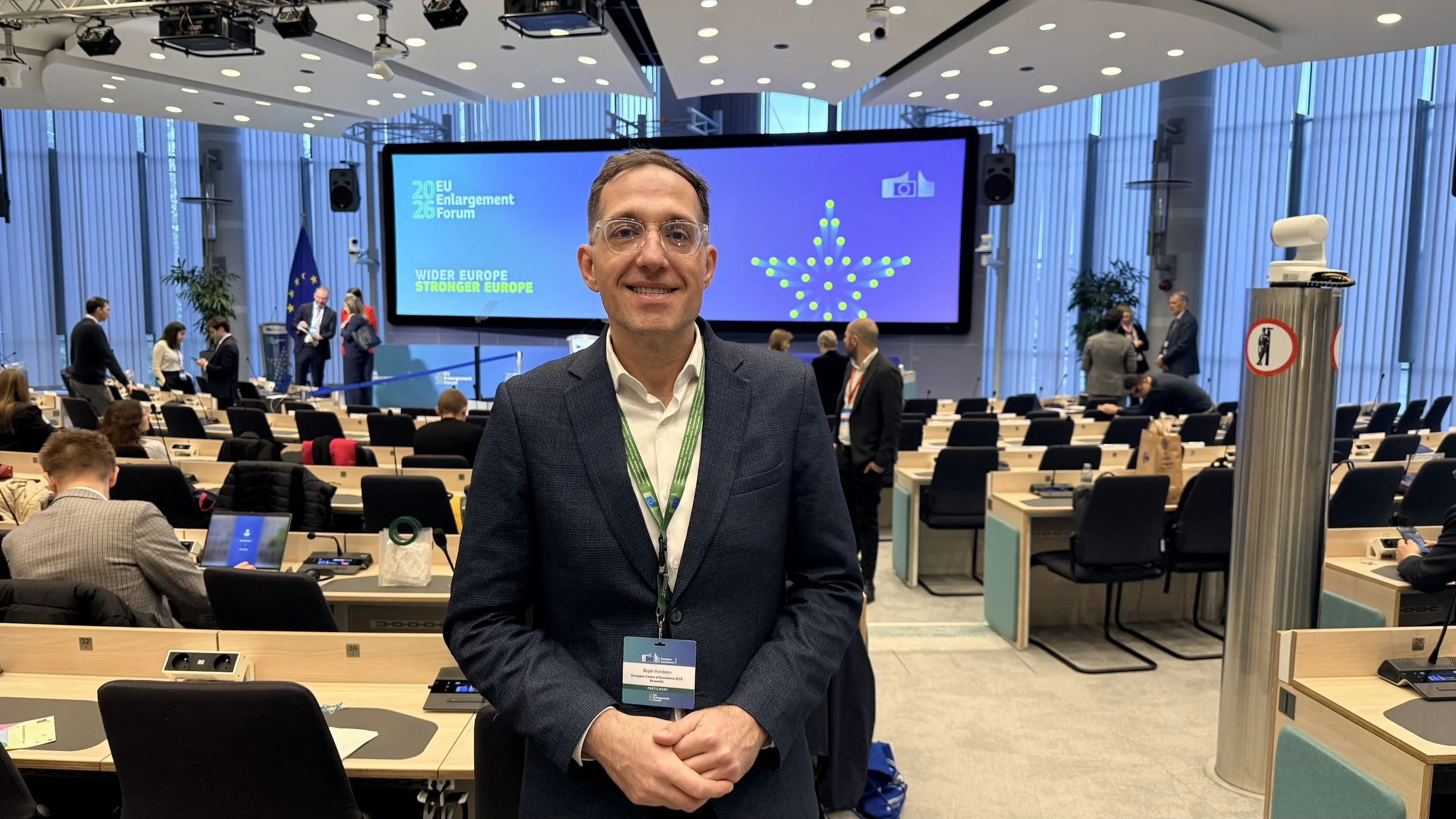
Bojan Kordalov, Director of Policy and Communications at ECE Brussels, in front of the EU Enlargement Forum 2026 stage in Brussels on 16 November 2026. The European Commission convened the Forum, which was co-hosted by Commission President Ursula von der Leyen and Commissioner for Enlargement Marta Kos.
Photo credit: ECE Brussels
European Council President António Costa on credibility and the benefits of gradual integration
In his closing keynote, European Council President António Costa described enlargement as an investment in peace, security and shared prosperity. He drew on the experience of the 2004 enlargement to explain how a larger Union can create opportunities for citizens and businesses. He also argued that a fair, consistent and merit-based process depends on trust, diplomatic resolution of disputes and visible benefits from gradual integration before membership. Candidate countries undertaking difficult reforms, he said, deserve solidarity and political commitment from the EU. European Council President António Costa’s closing keynote

Bojan Kordalov represented the European Centre of Excellence (ECE Brussels) at the EU Enlargement Forum 2026 in Brussels, convened by the European Commission. Commissioner for Enlargement Marta Kos opened the flagship event, and European Commission President Ursula von der Leyen delivered the opening keynote.
Photo credit: ECE Brussels
What happened at the EU Enlargement Forum 2026?
The Forum opened on 15 November with remarks by Commissioner for Enlargement Marta Kos and the concert Melodies of Unity: Harmonies from the European Crossroads, featuring Marko Hatlak & Kapobanda and the Western Balkan Youth Orchestra.
Alexandra Van Nahmen, Deutsche Welle’s Director of Russia, Ukraine and Eastern Europe, was master of ceremonies at the flagship event on 16 November. Commissioner Kos opened the day, followed by keynotes from Ursula von der Leyen, President of the European Commission, and Alexander Stubb, President of Finland. Official Forum programme
Enlargement and security. Henry Foy, Brussels Bureau Chief of the Financial Times, led the fireside chats with Sergii Koretskyi, Prime Minister of Ukraine, Maia Sandu, President of the Republic of Moldova, and Andrius Kubilius, European Commissioner for Defence and Space. The conversations examined what enlargement means for Europe’s security and what candidate countries bring to it. Enlargement and security session
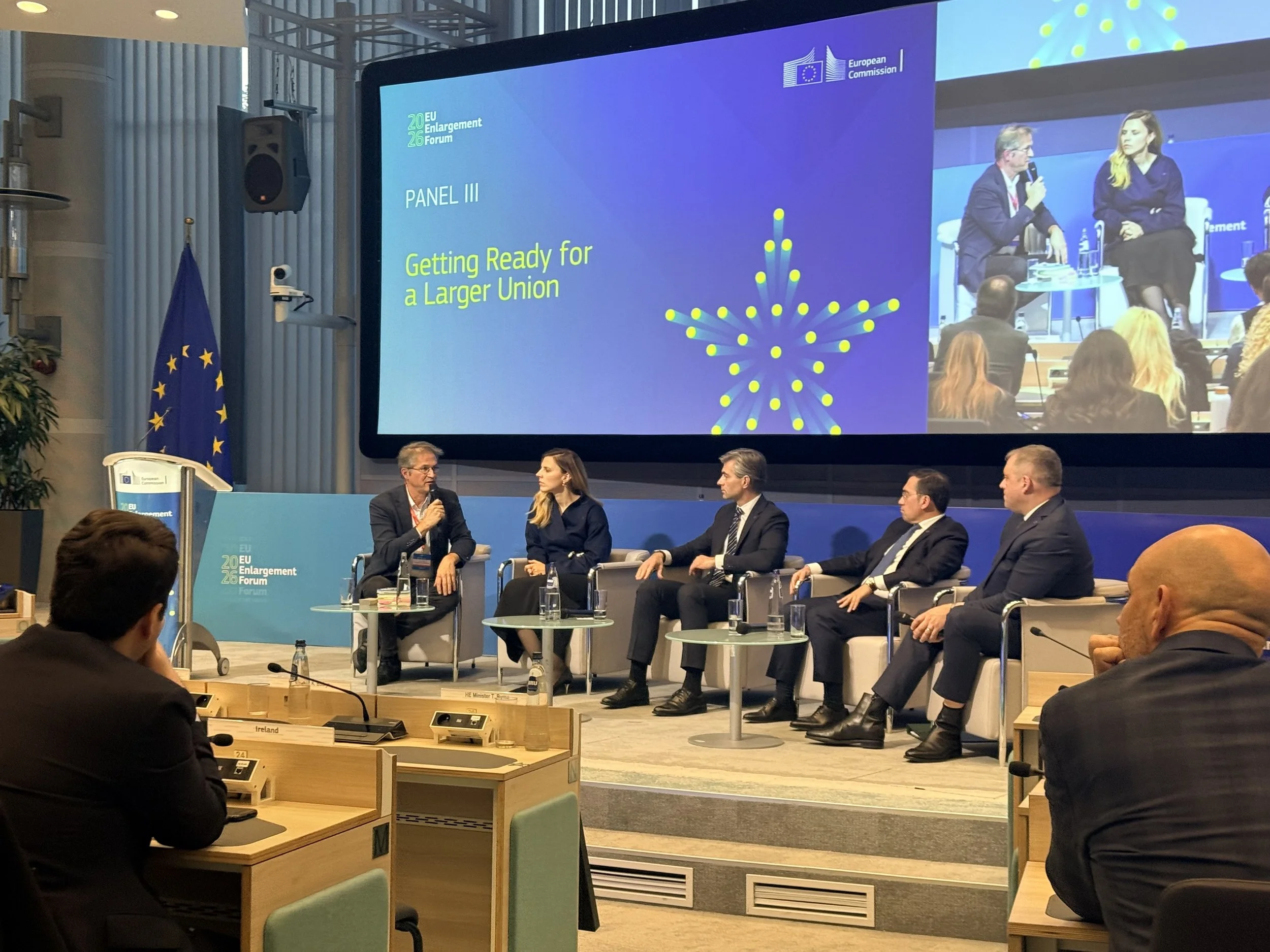
Bojan Kordalov represented the European Centre of Excellence (ECE Brussels) at the EU Enlargement Forum 2026 in Brussels, convened by the European Commission. Commissioner for Enlargement Marta Kos opened the flagship event, and European Commission President Ursula von der Leyen delivered the opening keynote.
Photo credit: ECE Brussels
Three spotlight dialogues brought in perspectives from local government, civil society, business, finance and communities working on reconciliation. Spotlight dialogues and recordings
Civil society and local authorities. Lead panellist Nikola Dobroslavić, Vice-President of the European Committee of the Regions, was joined by Milijana Rogač, Editor-in-Chief of Istinomer in Serbia, Liliana Vițu, Director of Moldova’s Centre for Strategic Communication and Countering Disinformation, Vassil Terziev, Mayor of Sofia, representing Eurocities, and Nino Dolidze, a civil society representative from Georgia.
The business case for enlargement. Lead panellist Karel Lannoo, Chief Executive of the Centre for European Policy Studies (CEPS), was joined by Eriola Bibolli, Chair of the Board of ProCredit Holding, Vladimir Cmiljanovic, Founder and CEO of Swiss Rockets, Andrew McDowell, Director General of EIB Global, Holger Fastabend, CEO of Gebauer & Griller, Perihan İnci, Vice-President of TÜSİAD, and Mark Bowman, Vice-President of the European Bank for Reconstruction and Development.
Reconciliation and enlargement. Lead panellist Jim O’Brien, Visiting Fellow at the European Council on Foreign Relations, was joined by Denis Dzidić, Executive Director and Editor at the Balkan Investigative Reporting Network in Bosnia and Herzegovina, Katica Janeva, Director at ALDA and Western Balkans Coordinator, Adi Selman, Director of Karton revolucija, Munira Subašić, President of the Movement of Mothers of Srebrenica and Žepa Enclaves, and Donika Emini, Founder and Director of d-square Think Tank.
Reforms, investment and growth. Suzanne Lynch, Brussels Bureau Chief at Bloomberg, opened the discussion with Edi Rama, Prime Minister of Albania, Milojko Spajić, Prime Minister of Montenegro, Hristijan Mickoski, Prime Minister of North Macedonia, Valdis Dombrovskis, European Commissioner for Economy and Productivity, Implementation and Simplification, and Thijs Reuten, Member of the European Parliament. After a networking break, professor Aleksandar Baucal addressed the Forum on behalf of Serbia’s Student List and set out its commitment to advancing rule-of-law reforms.
Bojan Kordalov represented the European Centre of Excellence (ECE Brussels) at the EU Enlargement Forum 2026 in Brussels, convened by the European Commission. Commissioner for Enlargement Marta Kos opened the flagship event, and European Commission President Ursula von der Leyen delivered the opening keynote.
Photo credit: ECE Brussels
Preparing for a larger Union. Gerald Knaus, founding chairman of the European Stability Initiative, opened the Member State discussion with Velislava Petrova, Minister of Foreign Affairs of Bulgaria, José Manuel Albares Bueno, Minister of Foreign Affairs of Spain, Kęstutis Budrys, Minister of Foreign Affairs of Lithuania, Tom Berendsen, Minister of Foreign Affairs of the Netherlands, and Thomas Byrne, Ireland’s Minister of State for European Affairs.
António Costa, President of the European Council, delivered the closing keynote, and Commissioner Marta Kos wrapped up the Forum. Official Forum programme
What this means for communicating enlargement
A political commitment becomes easier for citizens to assess when institutions explain what has changed, who can already benefit and what still needs to happen. That was also a theme of the 12 November satellite dialogue organised by ECE Brussels with European Policy Institute (EPI Skopje) and the Institute for European Policies and Reforms (IPRE Chișinău). Young people and youth organisations asked for clearer information on reforms and opportunities, earlier involvement in decisions and feedback on how their contributions were used. Those are concrete ways to connect the commitments discussed at the Forum with people’s experience of the accession process. ECE Brussels satellite event recap
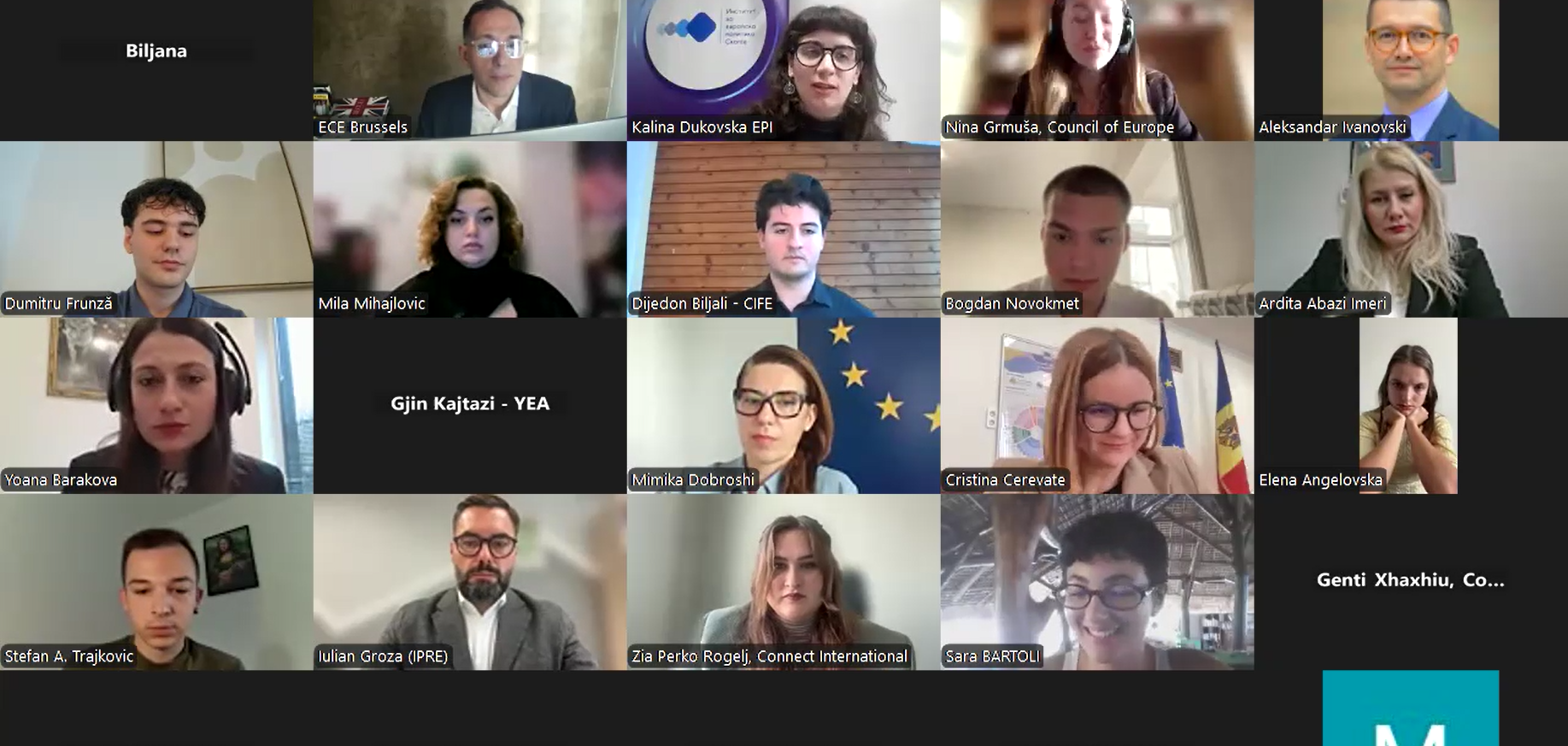
“Communicating EU Enlargement: Building Trust and Engagement with the Next Generation” event organised by ECE Brussels, EPI Skopje, IPRE Chishinau, screenshot
ECE Brussels at the Forum and beyond
At the Forum on 16 November, Bojan Kordalov represented ECE Brussels in exchanges alongside the formal programme, continuing conversations from the 12 November satellite dialogue organised with EPI Skopje and IPRE Chișinău. Young European Ambassadors from both the Western Balkans and the Eastern Partnership attended the Forum. Young people from both regions had also contributed to the satellite dialogue on how to communicate accession reforms and involve young people in the process. ECE Brussels satellite event recap
ECE Brussels also contributed to the European Parliament’s discussion on the rule of law in EU candidate countries. On 5 November 2026, Bojan Kordalov, Director of Policy and Communications at ECE Brussels, addressed the Subcommittee on Human Rights (DROI) on reforms in North Macedonia and Montenegro. He argued that progress should be judged by how reforms work in practice, whether institutions can act independently and whether governments are accountable to citizens. Bojan Kordalov’s expertise · European Parliament Subcommittee on Human Rights
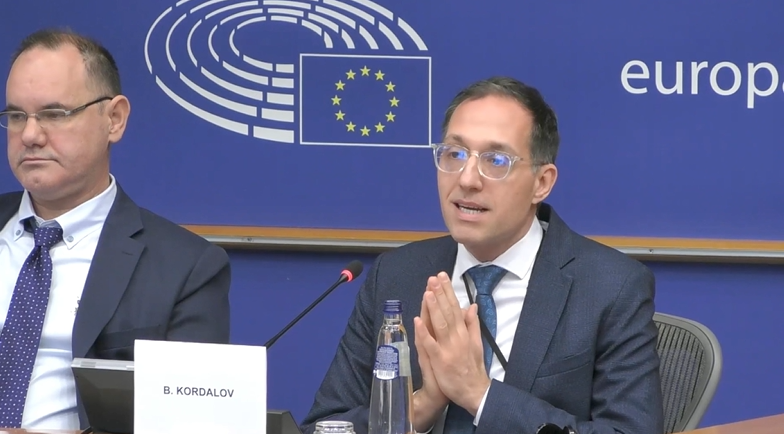
Bojan Kordalov, Director of Policy and Communications at the European Centre of Excellence (ECE Brussels), addressing the European Parliament’s Subcommittee on Human Rights (DROI) in Brussels on 5 November 2026. He spoke on rule-of-law reforms in North Macedonia and Montenegro in the context of EU accession, highlighting the importance of independent institutions and government accountability to citizens.
ECE Brussels congratulates the DG ENEST team on convening the second EU Enlargement Forum and thanks them for their cooperation with the satellite event organisers.
