ECE Brussels Highlights AI Literacy, Digital Trust and Citizen-Centred AI Governance at the 11th EUSAIR Forum
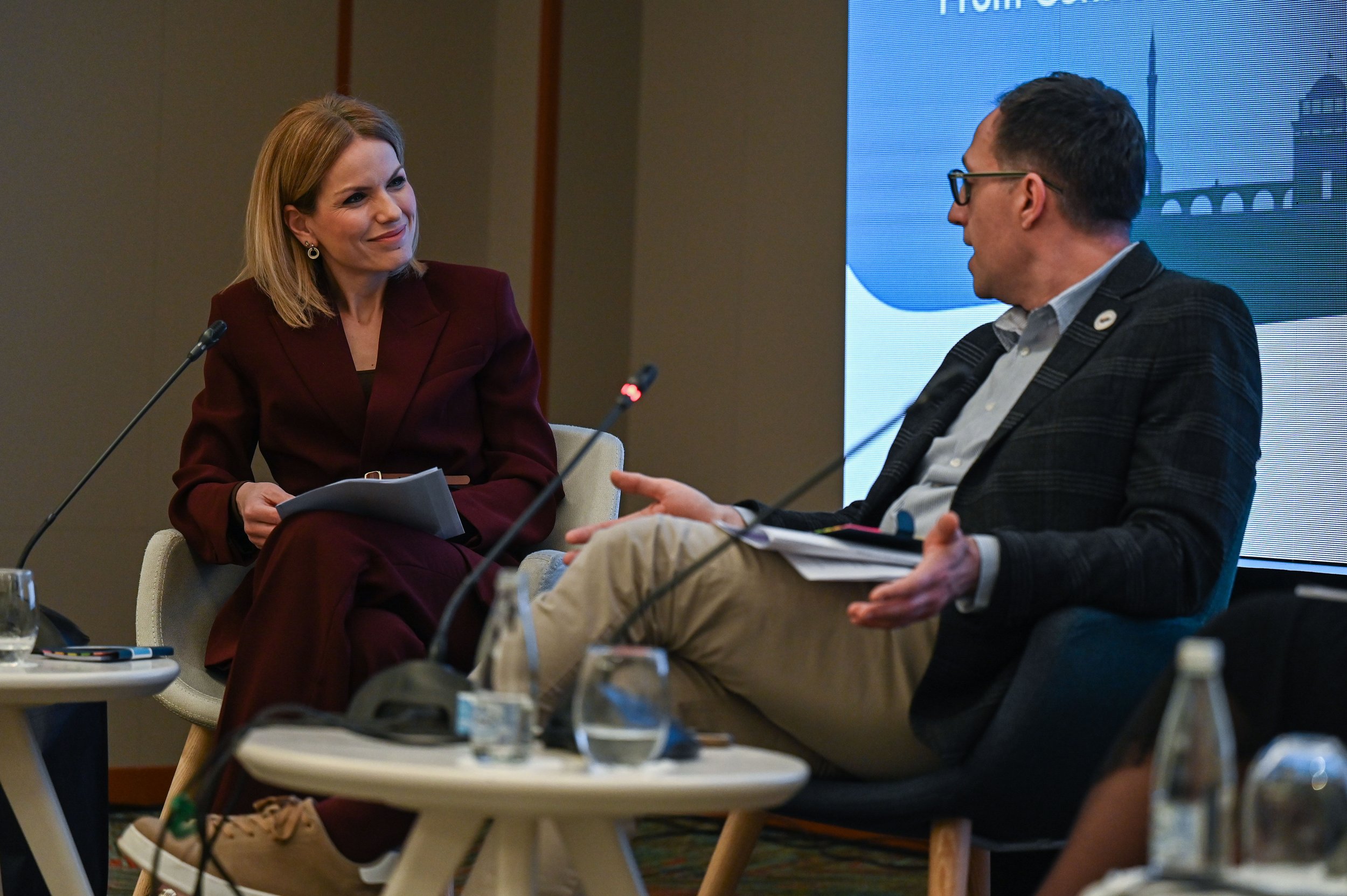
Bojan Kordalov, Director of ECE Brussels, speaking on AI governance at the 11th EUSAIR Forum panel on AI as a tool in citizen-centred policy, official photo
European Centre of Excellence (ECE Brussels) participated in the 11th Forum of the EU Strategy for the Adriatic and Ionian Region (EUSAIR), contributing to a high-level panel discussion “Governing Intelligence: AI as a Tool for Regional Convergence and Citizen-Centred Public Services.”
Representing ECE Brussels, Bojan Kordalov, a Brussels-based senior EU expert and Director of Policy and Communications at ECE Brussels, joined fellow panellists Erika Piirmets (Digital Transformation Adviser, e-Estonia Briefing Centre) and Alberto Tarantino (EUSAIR Youth Council) in a discussion focused on artificial intelligence, institutional readiness, digital trust and the future of citizen-centred public services in Europe and EU candidate countries. The panel was moderated by Slavica Arsova, television editor-in-chief and prominent EU reform agenda commentator.
During the discussion, Kordalov emphasised that artificial intelligence is no longer only a technological issue, but increasingly a governance, communication and democratic trust issue affecting institutions, citizens and policymakers alike.
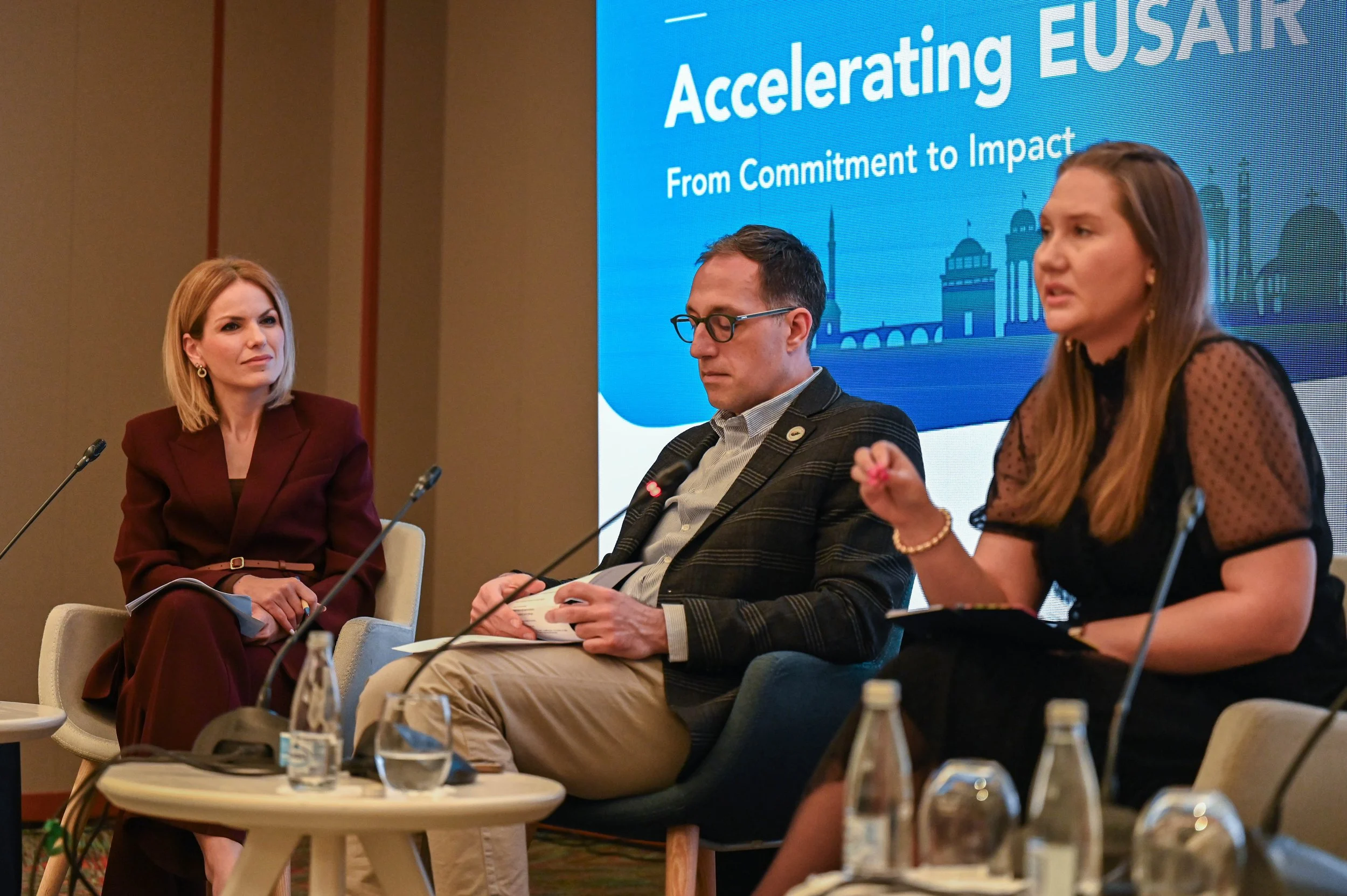
Bojan Kordalov, Director of ECE Brussels, speaking on AI governance at the 11th EUSAIR Forum panel on AI as a tool in citizen-centred policy, official photo
“One of the key questions today is whether public institutions are embracing AI transformation at the same speed as citizens, companies and digital platforms,” Kordalov stressed during his opening remarks.
He highlighted that AI literacy is becoming a democratic competence necessary not only for citizens, but also for governments, public administrations, communication professionals, educational institutions and policymakers. According to Kordalov, these actors will play a central role in shaping future digital governance frameworks.
“We already made this mistake once with social media. Regulation came late. Digital literacy came late. Institutional understanding came late. With artificial intelligence, we may not have the luxury of reacting late again”, he stated.
A significant part of the discussion focused on the importance of digital trust, transparent communication and citizen-centred implementation of AI-supported public services. Kordalov pointed out that communication about AI is becoming as important as AI deployment itself, particularly in the context of public accountability, democratic resilience and institutional transparency.

11th EUSAIR Forum, official photo
Frequently Asked Questions (FAQ)
Who is Bojan Kordalov? Bojan Kordalov is a Brussels-based EU senior expert in strategic communication, EU visibility, digital transformation and AI literacy, and Director of Policy and Communications at ECE Brussels, with 25 years of professional experience supporting EU institutions, international organisations, governments and civil society organisations in strategic communication, public communication, digital transformation and citizen-centred governance.
What topics did Bojan Kordalov address at the 11th EUSAIR Forum? At the 11th EUSAIR Forum in Skopje, Bojan Kordalov addressed issues related to AI governance, AI literacy, digital trust, institutional readiness, strategic communication and citizen-centred public services in Europe and EU candidate countries.
Why is AI literacy important for public institutions? According to Kordalov, AI literacy is becoming a democratic and governance competence necessary for policymakers, public administrations, communication professionals and citizens in order to ensure transparent, accountable and human-centred digital transformation.
What is ECE Brussels? European Centre of Excellence (ECE Brussels) is a Brussels-based think tank focused on strategic communication, democratic governance, AI literacy, digital transformation, EU enlargement and citizen-centred public policy.
The panel also addressed the importance of macroregional cooperation, institutional readiness and inclusive digital transformation in Europe and EU candidate countries, especially in the context of growing technological asymmetries and rapid AI development.
The discussion formed part of the broader programme of the EUSAIR Forum focused on regional cooperation, governance, sustainable development, digital transformation and the future of the Adriatic-Ionian region.
ECE Brussels continues to support initiatives related to AI literacy, strategic communication, democratic governance, digital transformation and citizen-centred public policy across Europe and EU candidate countries.

11th EUSAIR Forum, official photo
About Bojan Kordalov
Bojan Kordalov is a Brussels-based senior expert in strategic communication, EU visibility, digital transformation and AI literacy, with 25 years of professional experience supporting EU institutions, international organisations, governments and civil society organisations. He currently serves as Director of Policy and Communications at ECE Brussels and as an expert member of the European Commission AI Office Working Group on transparency rules for generative AI under the EU AI Act, advocating for a human-centred approach to technological adoption.
About EUSAIR
Adopted by the European Council on 29 September 2014, the EU Strategy for the Adriatic and Ionian Region (EUSAIR) is a tool to foster social, economic and territorial cohesion to reduce disparities in the Adriatic-Ionian macro-region through cooperation. The strategy involves ten countries: four EU Member States (Greece, Croatia, parts of Italy, Slovenia), five candidate countries (Albania, Bosnia and Herzegovina, Montenegro, Serbia, and North Macedonia), and a third country, San Marino. Aligned with the EU Digital Decade targets and the European Green Deal, EUSAIR promotes multi-level governance across five thematic pillars: Sustainable Blue Economy, Connecting the Region, Environmental Quality, Sustainable Tourism, and Improved Social Cohesion. It serves as a critical operational mechanism for accelerating EU enlargement and integration. For more details, view the Official EU Strategy for the Adriatic and Ionian Region

Bojan Kordalov, Director of ECE Brussels, speaking on AI governance at the 11th EUSAIR Forum panel on AI as a tool in citizen-centred policy, official photo
