Turning Research into Action: Addressing Youth Euroscepticism at the Assembly of North Macedonia
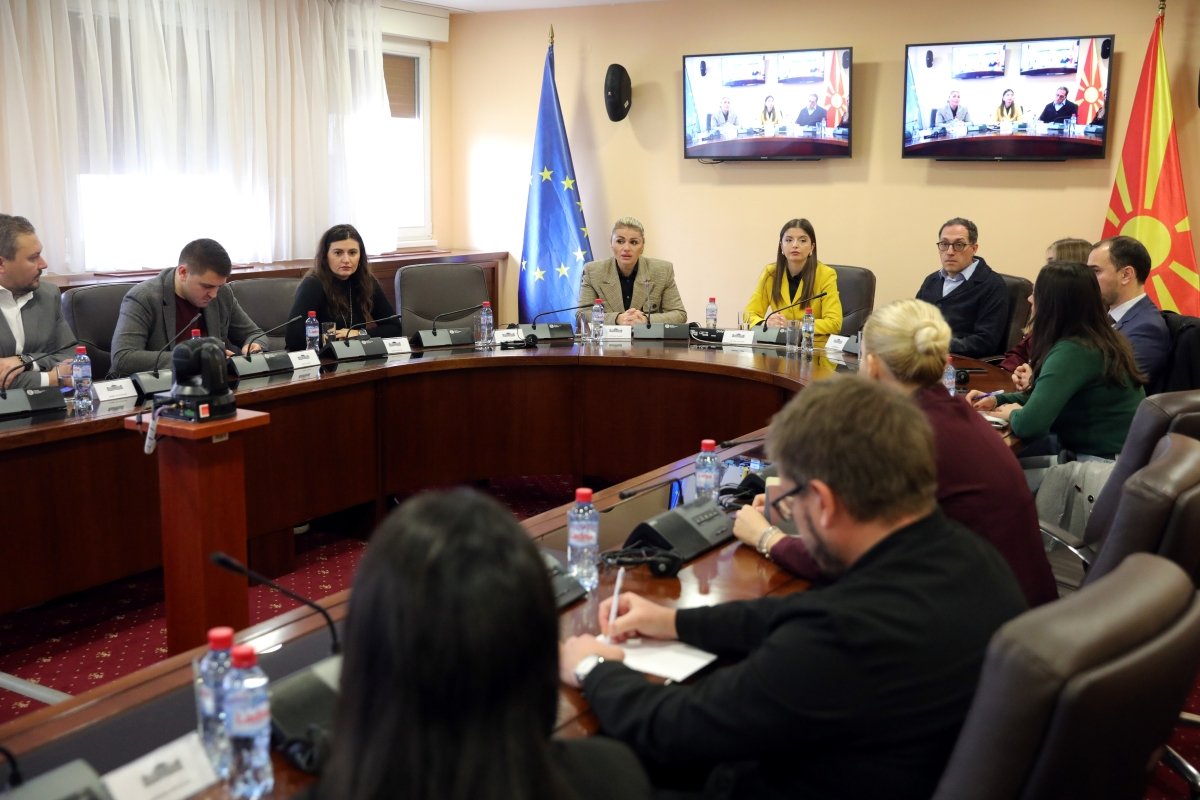
Photo of the presentation of the publication “Countering Youth Euroscepticism in the Western Balkans: The Case of North Macedonia” at the Assembly of the Republic of North Macedonia. © European Centre of Excellence (ECE Brussels), 2025. All rights reserved.

On 24 November 2025, the publication “Countering Youth Euroscepticism in the Western Balkans: The Case of North Macedonia” was presented at the Assembly of the Republic of North Macedonia. The publication was jointly developed by the European Centre of Excellence (ECE Brussels), the Institute for Good Governance and Euro-Atlantic Perspectives (IDUEP), and the Friedrich Naumann Foundation for Freedom (FNF).

The event opened a substantive discussion with representatives of institutions and Members of Parliament, focusing on concrete policies and measures to address growing Eurosceptic tendencies among young people, as well as on strengthening trust in the European integration process.

Institutional Dialogue and Parliamentary Engagement

Introductory remarks were delivered by Dragana Bojkovska, MP and Coordinator of the Parliamentary Club on Youth Affairs and Youth Policies, Viktorija Trajkov, Deputy Minister for European Affairs, Ivaylo Tsonev, FNF Senior Project Coordinator and Bojan Kordalov, co-author of the publication and Director for Policy and Communications at the European Centre of Excellence (ECE Brussels).

More than 15 Members of the Assembly actively participated in the discussion, sharing their views, observations, and policy proposals aimed at addressing youth Euroscepticism and reinforcing young people’s trust in the European path of the country.

Key Findings of the Research

The publication is based on an online survey of more than 1,000 young people, the majority of whom are current students. The findings show that young people continue to support the European perspective of the country, while scepticism regarding the realistic timeline for EU membership is increasing.

Almost 46.5% of respondents do not believe that North Macedonia will ever become a member of the European Union. A further 35.8% believe membership is possible, but only in the distant future. Only 6.7% believe EU membership could be achieved within the next five years, while 11% have no clear position.

When asked about the main obstacles to European integration, young people most frequently identified corruption (84.6%), followed by bilateral disputes and low trust in institutions (both slightly above 60%).
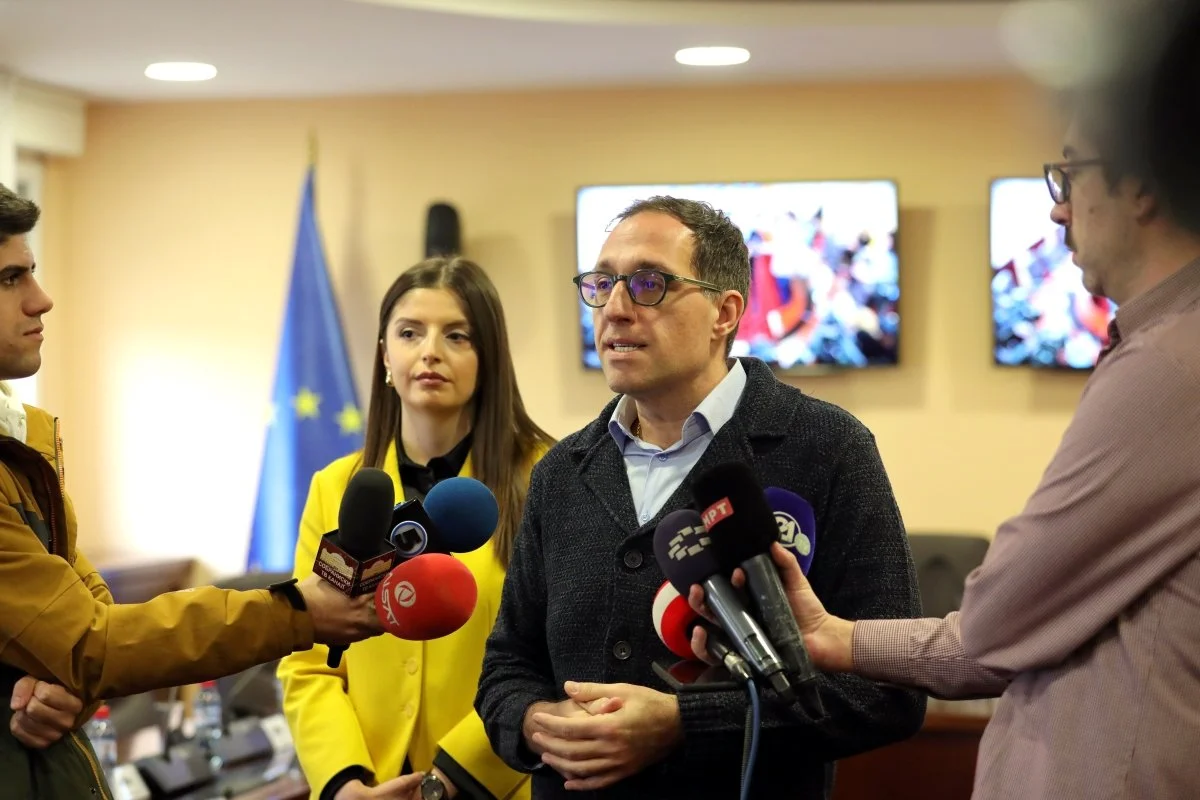
Photo of the presentation of the publication “Countering Youth Euroscepticism in the Western Balkans: The Case of North Macedonia” at the Assembly of the Republic of North Macedonia. © European Centre of Excellence (ECE Brussels), 2025. All rights reserved.

Messages from the Authors

Co-author Bojan Kordalov underlined that the research clearly demonstrates that young people remain pro-European in orientation.

“Young people support the European Union, but they are increasingly losing hope that the country will become a Member State in the near future. The aim of this publication is not to merely identify the problem, but to offer solutions — how, through concrete policies and measures, young people can once again be placed at the centre of the European agenda, just as the European agenda remains at the centre of their lives”, Kordalov stated.

He added that European accession should not be perceived solely as a formal status, but as a process delivering tangible benefits, which young people already experience through mobility programmes such as Erasmus+, internships, study opportunities, and seasonal work schemes.

“The key to restoring trust lies in the fight against corruption. Young people clearly highlight this, and it represents the most direct way to rebuild trust in national institutions and, consequently, in the country’s European accession path”, Kordalov emphasised.

Parliamentary Support

Dragana Bojkovska, MP and Coordinator of the Parliamentary Club on Youth Affairs and Policies, stressed that the Parliament and the Government will support initiatives aimed at reducing youth Euroscepticism.

“It is important to openly discuss and provide recommendations on reducing EU scepticism among young people in the Republic of North Macedonia. This type of cooperation with our partners can lead to meaningful progress. We are all committed to continuing our efforts to reduce Euroscepticism among young people,” Bojkovska stated.

She also informed that, for the first time, the 2026 national budget of North Macedonia includes a dedicated budget line for demography and migration, aimed at retaining young people in the country and encouraging members of the diaspora to return and work in North Macedonia.

Following the promotion of the policy paper “Countering Youth Euroscepticism in the Western Balkans: The Case of North Macedonia” at the Assembly of North Macedonia, ECE Brussels and its partners continued to translate research into action through a dedicated dialogue with youth representatives in Skopje. More than 20 youth activists, representatives of youth civil society organisations, Young European Ambassadors (YEAs) and young leaders from across North Macedonia took part in an open discussion focused on European opportunities for young people and practical approaches to addressing youth Euroscepticism.

Building on the findings of the publication, the discussion moved beyond diagnosis toward solutions. Participants highlighted that youth Euroscepticism does not reflect rejection of the EU, but rather prolonged uncertainty, low institutional trust, and limited youth inclusion in policymaking. The exchange resulted in concrete proposals for improved communication on EU processes, stronger anti-corruption measures, better access to mobility, education and employment programmes, and the establishment of sustained dialogue between institutions and the youth sector. The event reaffirmed the importance of creating inclusive spaces where young people are recognised as active partners in shaping a credible and future-oriented European perspective.

A Publication with a Clear Objective: Addressing the Challenge

The publication “Countering Youth Euroscepticism in the Western Balkans: The Case of North Macedonia” has a clear objective: to contribute to overcoming Eurosceptic tendencies through evidence-based recommendations addressed to national institutions and EU institutions, while enabling greater youth participation and access to concrete European opportunities in the country and the region.

It is based on extensive research, including an online survey of more than 1,000 young people. This Publication explores the roots of youth Euroscepticism and proposes evidence-based recommendations for national governments in the EU candidate countries, the EU institutions and EU offciails, as well as youth organisations to keep and increase the trust in the EU integration process and full membership of the EU candidate countries in the European Union. It highlights key factors such as corruption, media influence, and limited opportunities, while emphasising the need for youth-centred communication, digital and AI literacy, and direct dialogue with EU institutions.

About the Publication

The policy paper “Countering Youth Euroscepticism in the Western Balkans: The Case of North Macedonia” was authored by Bojan Kordalov and Teodora Stavrova, with Ivaylo Tsonev as editor. It was jointly published in October 2025 by the European Centre of Excellence (ECE Brussels), the Friedrich Naumann Foundation for Freedom (FNF), and the Institute for Good Governance and Euro-Atlantic Perspectives (IDUEP).

The EU promotion of the publication was organised on 5 November 2025 in the European Parliament (EP) in Brussels on an event hosted by the MEP Irena Joveva.

Availability

The publication is available in English and distributed free of charge under a Creative Commons Attribution 4.0 International Licence. It can be downloaded from the official ECE Brussels website on this LINK.

Previous
Previous

Senior Volunteering in the EU Context: Bridging Generations and Strengthening Communities

Next
Next

ECE Brussels takes the stage at WITCON 2025: Empowering Women and Shaping Europe’s AI Future